in an environment where traffic peaks and security threats coexist, monitoring live broadcast websites on us high-defense servers is the core means to ensure business continuity. this article systematically explains how to improve real-time availability and quickly locate and recover faults, from monitoring strategies and key indicators to automated responses and security detection.
american high-defense servers are often used to carry large-scale live broadcast traffic, but they face risks such as ddos, link fluctuations, and resource saturation. specialized monitoring can detect performance degradation, business interruption and signs of attacks in advance, ensuring live broadcast continuity and user experience, while providing data support for operation and maintenance decisions and capacity planning.
core monitoring metrics should include availability (successful response rate), end-to-end latency, packet loss rate, and error code distribution. for live broadcast scenarios, it is also necessary to monitor buffering, startup time and the number of concurrent connections. by quantifying these indicators, we can intuitively judge the real-time service quality of the us high-defense server live broadcast website.
the alarm strategy should combine instantaneous thresholds and trend thresholds to avoid alarm storms caused by a single fluctuation. set hierarchical thresholds and configure suppression and recovery strategies for the us high-defense server live broadcast website to ensure that the operation and maintenance team can respond promptly when critical events occur and reduce false alarm interference.
live broadcast users are widely distributed, and single-point monitoring cannot reflect the real experience. by deploying detection nodes in north america and key geographical locations to collect access link and playback quality data in real time, cross-regional network bottlenecks or operator issues can be discovered, thereby optimizing cdn or link switching strategies.
active monitoring periodically initiates requests to detect availability and latency, while passive monitoring relies on real user logs and edge sampling analysis experience. combining the two can obtain observability and business context at the same time, making it easier to accurately locate the scope of impact and user groups when abnormalities occur on the us high-defense server live broadcast website.
establish an automated traffic switching and fallback mechanism to quickly direct traffic to backup lines or areas when a node is detected to be unavailable or under attack. combined with load balancing and health check strategies, automated response can significantly shorten recovery time and improve the continuous availability of us high-defense server live broadcast websites.
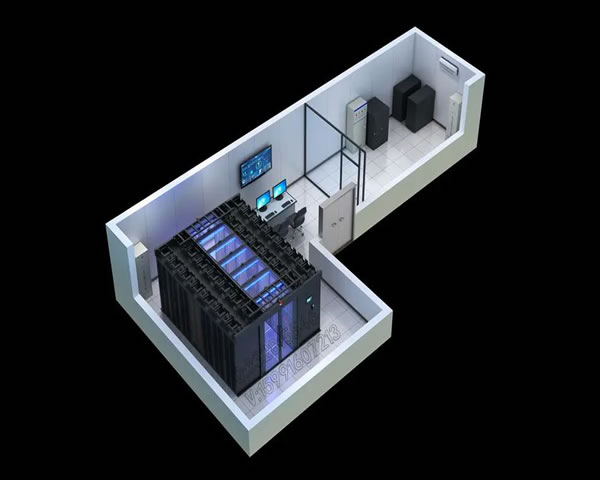
centralized logging and tracing can correlate edge, back-to-source and application layer logs for rapid root cause analysis. indexing key events of live streaming, such as streaming failures, encoding exceptions and buffering duration, can quickly locate the source of the problem after a failure and guide repair plans, reducing service interruption time.
capacity prediction and regular stress testing are performed based on monitoring data to verify the performance of the us high-defense server live broadcast website under peak traffic. through progressive concurrency testing and scenario simulation, bottleneck resources are identified and expanded in advance to ensure that the system can still operate stably during marketing activities or sudden traffic.
security monitoring should cover abnormal traffic pattern detection, sudden increase in connection statistics and protocol anomaly alarms. combining behavioral analysis with blacklist/whitelist strategies, attack tendencies against us high-defense server live streaming websites can be detected at an early stage, and defense rules or traffic cleaning can be triggered to protect business availability.
to ensure the real-time availability of the us high-defense server live broadcast website, a monitoring system covering multiple levels should be built: clarify key indicators, deploy multi-point detection, integrate active and passive monitoring, realize automated recovery, and strengthen log analysis and security detection. regularly review the monitoring strategy and link it with capacity planning to continuously improve stability and user experience.
- Latest articles
- Popular tags
-
Analysis Of The Advantages Of High-defense Hard Defense Servers In The Us Market
this article analyzes the advantages of high-defense hard-defense servers in the us market, including enhanced network security, reduced downtime risks, and flexible scalability. -

Analysis Of The Advantages And Application Cases Of Us Server High-defense Cdn
this article analyzes the advantages and application cases of us server high-defense cdn to help you understand its importance in network security. -

How To Evaluate The Ip Net Worth And Export Quality Standards Of Multiple Ip Server Suppliers In The United States
this article introduces how to evaluate the ip net worth and export quality standards of multi-ip server providers in the united states, including key points and suggestions such as ip reputation, routing and delay indicators, actual testing methods, ip pool management, and compliance support.